What towing company marketing has to do
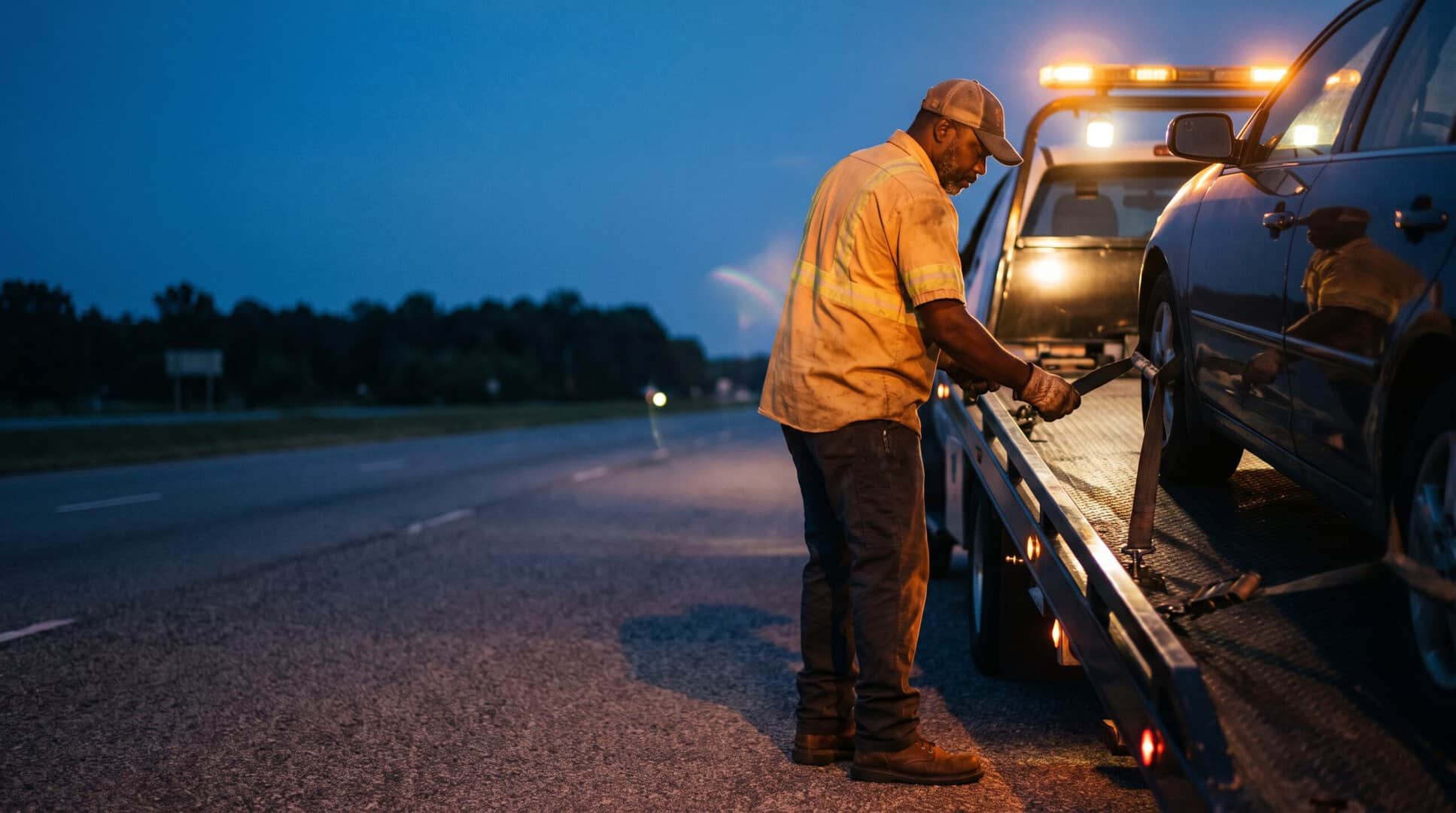
Towing company marketing has one job that most trades never face. It has to put your number in front of someone who needs a truck right now, at any hour, and then make sure somebody picks up. A driver on the shoulder with the hazards on is not comparing five websites. A property manager with a car blocking the fire lane is not waiting until Monday. They search, they tap the first number that looks real and close, and they call.
Service Ranker works with tow operators who want more of that work coming straight to them. We handle the Google search, map, ads, and AI side of your marketing so you can keep the trucks moving. Here is how we look at it.
Where tow calls actually come from
Most towing businesses run on a mix of work, and only some of it is moved by marketing. Being honest about that is where a good plan starts.
- Motor club and dispatch network jobs. Steady volume, but the club sets the rate and decides who gets the job. Marketing will not change that.
- Police rotation and non-consent tows. These come through the agency’s own list and requirements. No ad gets you on a rotation.
- Direct roadside calls. Breakdowns, lockouts, jump starts, flat tires, winch-outs, and accident recovery from drivers who searched and picked you. This is where search does the most, because the first tow company a stranded driver finds usually gets the job.
- Commercial and private property accounts. Body shops, dealers, fleets, apartment complexes, and HOAs who call the same tow company over and over once they trust it.
The last two are the ones you control, and they usually pay better than club work. Our goal is to grow them so a slow month at the club does not mean a slow month for you.
Google Business Profile for tow companies
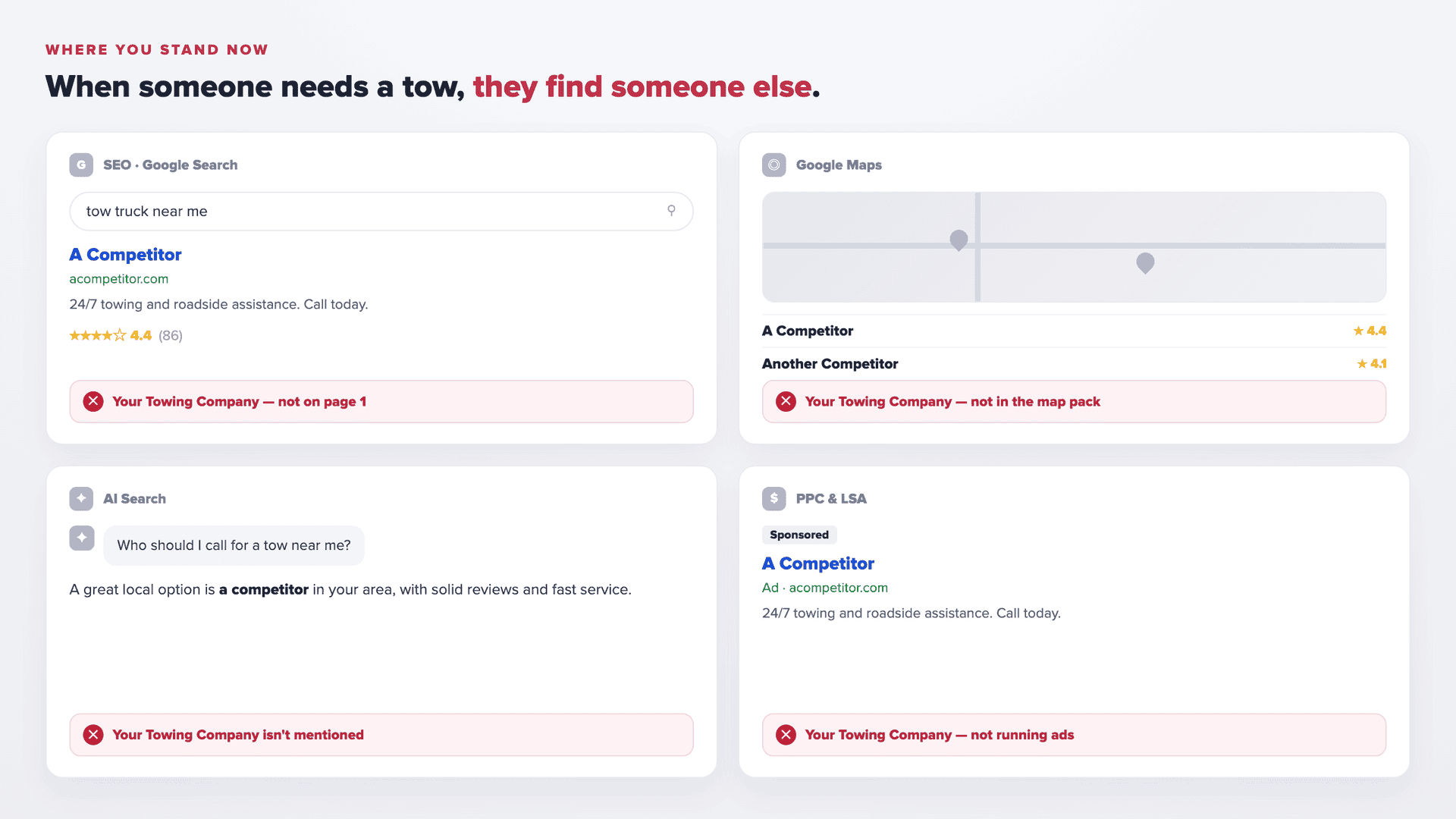
For roadside work, the map results usually win the call before anyone sees a website. That makes your Google Business Profile the most important thing you own online, and the center of local SEO for a tow operator. We set up “Towing service” as the main category, add roadside assistance where it fits, set your hours to 24 hours if you truly answer all night, and draw a service area that matches how far your trucks really go. Most tow operators meet the customer at the vehicle, so the profile is usually set up as a service-area business with the yard address hidden.
An impound lot is different, because people come to it. If the lot is a real, staffed location with set release hours, it can qualify for its own listing, which keeps release questions off your roadside profile. If it does not qualify, a second listing breaks Google’s rules, so we check before building anything. Towing searches are also crowded with fake listings and lead brokers, and Google lets you report them. Our map pack and profile work covers all of this, plus the photos, posts, and service list that keep the profile active.
SEO for towing companies
Below the map, the regular search results still bring in a lot of business, especially for anything that is not an emergency. SEO for towing companies comes down to giving Google a clear page for each thing you do and each place you do it. One page that says “we tow” will not rank for heavy-duty towing, flatbed towing, motorcycle towing, roadside assistance, or private property impound. Separate pages for each one, plus pages for the towns you actually cover, give every search a page to land on.
We also write content that answers what people look up before they call. What a tow costs to the next town, whether a flatbed is needed for an all-wheel drive car, how to get a car out of impound. When your site answers those plainly, it earns rankings and it earns trust. Good SEO takes longer than ads, but that traffic does not cost you a click.
Google Ads that run when the calls do
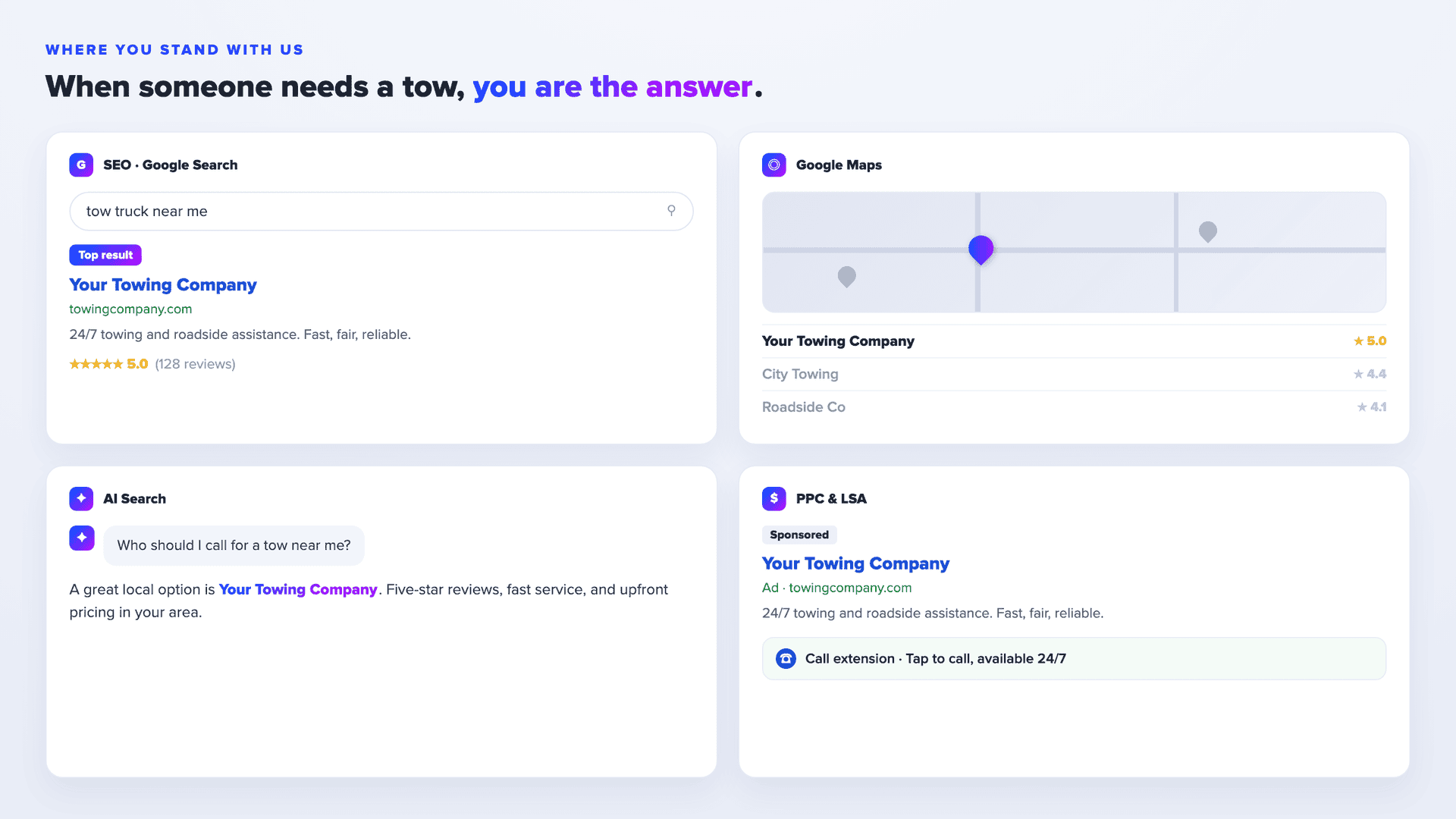
Ads are the fastest way to get to the top while your SEO builds. For towing, the setup matters more than the budget. We favor call ads, so a driver can dial straight from the result. We schedule spend for the hours your trucks are free, keep the radius tight to where you can get to quickly, and push harder at night and on weekends if that is when your competitors go quiet.
Most of the wasted money in towing ads comes from searches that are not looking for a tow at all. “Towing capacity,” “tow truck for sale,” “tow truck driver jobs,” and “tow hitch” all get blocked before they cost you anything. That is a big part of how we manage Google Ads for towing. Google’s Local Services Ads are not open to every trade in every market, so we check whether they are available for towing in your area before recommending them.
Reviews when the customer did not choose you
Towing has a review problem most trades do not. A driver you rescued at midnight is grateful. A car owner who had to pay to get out of impound is not, and they are often the one who leaves a review. If you do private property work, your rating takes hits that have nothing to do with the job you did.
The fix is volume and response. We help you ask every happy roadside and account customer for a review, with a simple text link sent right after the job. We also help you answer the angry ones calmly and with the facts, because the next customer reads your reply more closely than the complaint. Maps, search, and AI tools all lean on reviews, so this work pays off everywhere.
Winning commercial and property accounts
A body shop manager, a dealer, a fleet supervisor, or a property manager does not pick a tow company in a panic. They check you out. They look at your website, your reviews, and whether you look like an established local outfit that will show up and handle the paperwork. More of them now ask ChatGPT or Google’s AI answers for names before they call anyone, which is why showing up in AI answers matters for this side of the business.
We give those buyers their own pages. Private property and parking enforcement towing for apartment complexes and HOAs. Commercial and fleet towing. Dealer and body shop transport. Each page explains what you handle, the area you cover, and how to set up an account. Those are the customers who call again and again.
Answering fast enough to keep the job
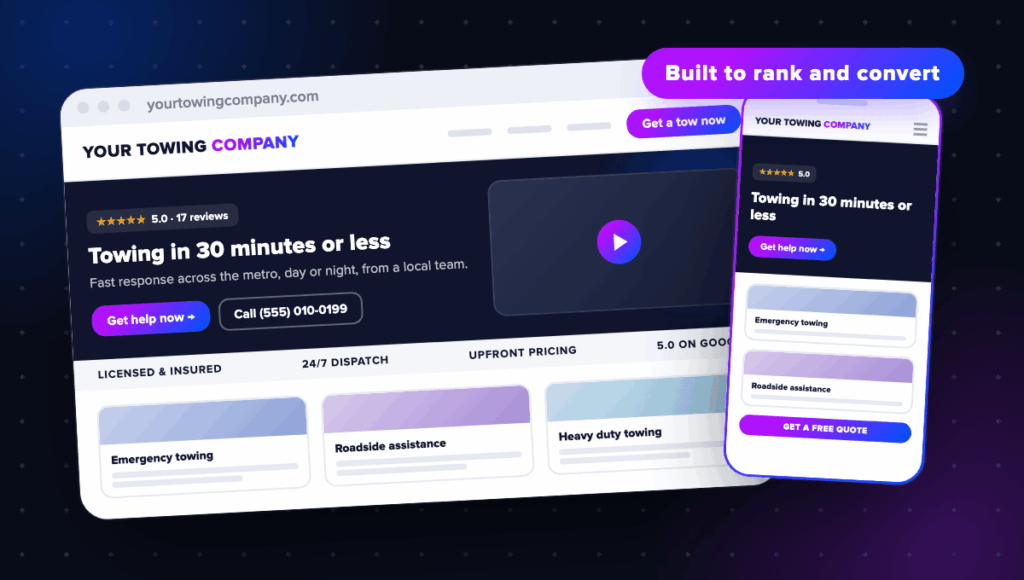
All of this only works if the phone gets answered. A stranded driver who hits voicemail calls the next number on the list. Your website puts the phone number at the top of every page with one-tap calling on mobile, and lists the vehicles you can handle so nobody calls you for a job you cannot take. When a call is missed, an automatic text goes back so the driver knows you saw it.
We also track which calls came from the map, the website, and ads, so you can see what is working instead of guessing. Social media helps with brand presence and recruiting drivers, but it is rarely where emergency calls start, so we keep the focus on search.
What results look like
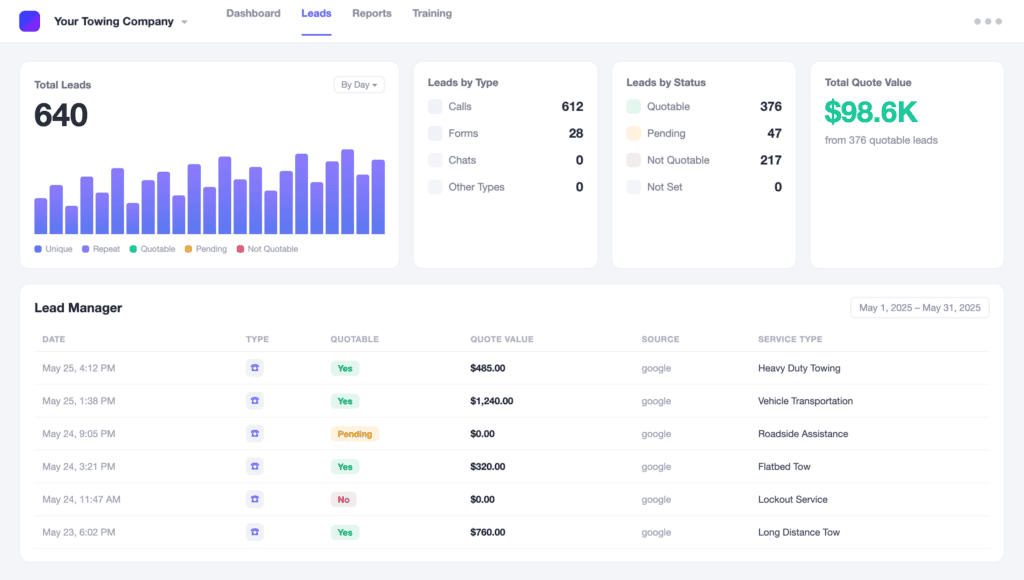
Google Ads can start bringing in calls within days. Profile and SEO work usually shows first movement in a couple of months, and the real momentum builds over three to six months. Commercial accounts are slower still, because those buyers take time to decide. The smart play is to run ads while the free traffic grows, then turn ads up or down as you need. Anyone promising the top spot overnight is not being straight with you.
Let’s get your phone ringing
Tell us about your towing business, the trucks you run, and the area you cover. We will show you where your calls are going today and how to get more of them coming straight to you. You run the trucks, we keep the calls coming.