
Motor club work keeps a lot of tow trucks rolling. AAA alone responded to more than 30 million roadside events in 2025, most of them tows, dead batteries and flat tires. Motor clubs like AAA and Agero route much of that roadside assistance work to local operators under contract. If you run a towing company, there is a good chance some of those calls are yours.
The catch is who sets the terms. The club decides the rate, the ETA you have to hit and which truck gets the next job. Steady volume is not the same thing as a business you control. The way out is not quitting every network next Monday. It is building towing calls without motor clubs, one channel at a time, until direct work is the floor and dispatch is the fill. Here is how that shift actually works.
How towing companies end up running on motor club dispatch
Nobody starts a towing business planning to depend on motor clubs. It happens because the work shows up. A new tow company signs on with a network or two, the dispatch app starts chirping and the trucks stay busy without a dollar spent on marketing. When you have a truck payment and insurance due, that feels like the smart move. Often it is.
The cost is quieter. On a dispatched call, the club owns the customer relationship. The stranded driver thinks of the club as the company that helped, not you. They rarely save your number or think to review your business, and next time they call the club again. You did the work, but the club kept the customer.
Then there are the rules. Acceptance rates, ETA targets and rate sheets all come from someone else, and motor clubs can change them whenever they like. A towing business that runs mostly on dispatch is renting its call volume, and the landlord writes the lease.
Four owned sources of towing calls that replace dispatch
Direct call volume for a tow company comes from four places: drivers who search on their own, Google’s Local Services Ads, repeat accounts like body shops and property managers, and a phone that gets answered every time. None of them sets your rate for you, and every customer they bring in is yours to keep.
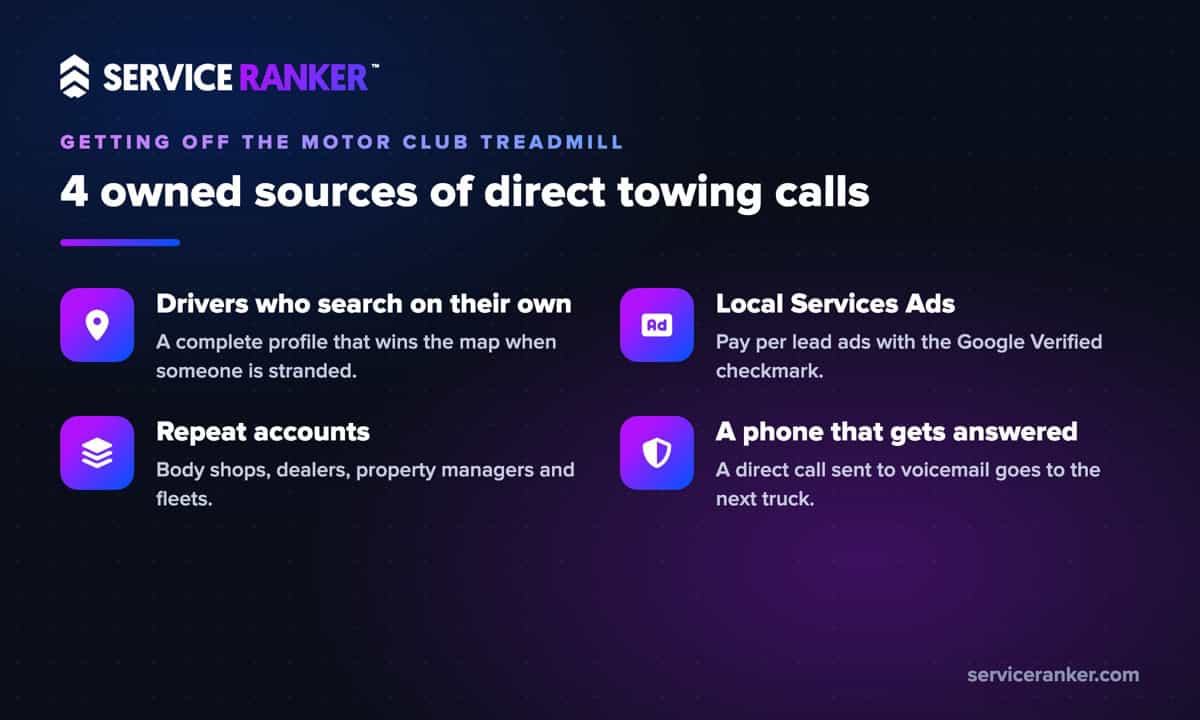
Each one feeds the others. A driver who found you on the map and got good service leaves a review, which helps you win the next search. A property manager who sees those reviews is easier to sign. The ads fill gaps while the map builds. And answering is the channel owners forget, because a direct call that goes to voicemail becomes a job for the next truck.
Clubs hand you the job. These four make you the company people choose. That difference is where the margin lives.
Showing up when a stranded driver searches on their own
Google says local results are decided mainly by three things: relevance, distance and prominence. Relevance is how well your profile matches the search. Distance is how far you are from the person searching. Prominence is how well known you are, which includes your reviews. Google also says businesses with complete and accurate information are more likely to show up.
For towing companies, distance carries extra weight because the searcher is wherever their car died. That means your free Google Business Profile has to tell the truth about where you go and when. Set a real service area, not just your yard’s zip code. List the hours you actually answer, and if you run 24 hours, say so. Pick the most accurate primary category and add each of your towing services, from lockouts and jump starts to winch-outs and flatbed tows. Your website should match it page for page, so Google and the driver see the same story.
We covered the profile, review and mobile site basics in why the first tow truck a driver finds wins the job, so we will not repeat them here. The point for this post is simpler. Every search you win is a customer the club never touches. That is why our marketing for tow companies starts with the map, not the ads.
Local Services Ads put towing on a pay per lead footing
Towing is listed as an eligible Local Services Ads category in the U.S. These ads charge per lead rather than per click, and they sit above the regular search results on a phone. For an owner used to dispatch, the model feels familiar: you pay when a real customer reaches out, not when someone glances at an ad.
Two things changed recently. Google replaced the old Guaranteed and Screened badges with a single Google Verified checkmark on October 20, 2025. And Local Services Ads are moving into Google Ads, with service-area businesses expected to transition in late 2026. Pay per lead stays. We broke down that move in what changes when Local Services Ads move into Google Ads.
The difference from dispatch is ownership. An LSA caller found your name, your reviews and your verified badge. When the job goes well, they remember you.
Accounts that call you without a search
The steadiest direct volume does not come from strangers at all. It comes from businesses that need a tow company again and again. Body shops need cars brought in. Dealers move vehicles between lots. Apartment and HOA managers deal with abandoned cars and fire lane problems. Small fleets break down on a schedule nobody likes.
These accounts are won with handshakes, but they get checked online first. A service manager or property manager will look you up before they ever call. If your site and profile look abandoned, the handshake never happens. A clear page on your website about the commercial work you take, real photos of your trucks and recent reviews make you easy to vet.
Account work also smooths out the week. Roadside assistance calls spike with weather and holidays. A body shop sends cars on a Tuesday afternoon. That predictable volume is exactly what lets you lean less on dispatch during the slow hours.
Shifting the mix without a cash flow hole
Here is the mistake to avoid: dropping one of your motor clubs because you are angry about the rates, then watching the trucks sit while direct calls take months to build. Treat club work as fill, not the floor. Keep it while the owned channels grow, and shrink it only where direct work has already replaced it.
A practical way to do that is by hour band. Look at when your direct calls come in. If weekday daytime is now full of direct roadside and account work, start declining low-value dispatch offers in those hours. Keep accepting club calls overnight or on slow days until direct volume covers those too. The trucks stay busy the whole time, and your best hours go to customers you keep.
Answering matters just as much here. A dispatched job arrives whether or not you were by the phone. A direct caller does not wait. If nights go to voicemail, you have built visibility for your competitors. Before you cut any club volume, make sure direct calls get a live answer, whether that is you, a driver on rotation or an answering service that can take the customer’s details.
How to tell the mix is moving
You cannot manage a shift you do not measure. Tag each job by where it came from: club dispatch, direct search, Local Services Ads or a repeat account. Put it on the ticket, even when the day is busy.
In the towing work we do, this is usually the first eye opener. Owners tend to guess their direct share is higher than it really is, because the direct calls are the memorable ones. Once the tickets carry a source, the real split between motor clubs and direct customers shows up fast.
Then check two numbers each month. First, the share of jobs coming from owned sources. Second, what each source earns per truck hour, since a short direct call near the yard can beat a long dispatched run once you count drive time and waiting. Your Google Business Profile also reports calls made from the listing, which shows whether the map is pulling its weight. If owned share climbs while the trucks stay busy, the plan is working.
Getting off the motor club treadmill is a slow turn, not a hard stop. Win the searches, add pay per lead ads where they make sense, build a few loyal accounts and answer the phone. Club work then becomes a choice instead of a requirement. If you want a partner on the search and ads side, we can help your tow company build its own call volume. You run the jobs, we keep the calls coming.